It struck me recently that it is 30 years since I first had something I wrote published. At that time I was trying to understand how to hold together my small life with the life of the world that seemed a complex mix of deep joys and pains. It had been 10 years since my Christian faith had come alive and I had become absorbed with Jesus, the divine man who walked through the mix of life and valued each person he met. I had discovered a love and local community that had slowly begun to transform me. I had tasted the divine Spirit by which we are immersed in the fullness of God. It was all enchanting and I found I wanted to communicate this, so I wrote. Looking back, I think I needed to write both because I was fascinated but also because I struggle to remember what I’ve learnt and need to keep relearning! Moreso, I struggle to live the little wisdom that I have gained! Perhaps I write because I am fascinated with life and faith but I struggle. I pray that others may be helped through their struggles to glimpse the wonder of faith and life through my words. Good Christian writing immerses us in the presence of the God in whom we live by faith.
The traditional resources for those struggling to understand faith are the rich writings of theology. For those like me who like to connect things together and embrace the whole of life, the traditions of systematic and mission theology particularly appeal. These opened my eyes and heart to a larger vision of God and God’s heart for all people and indeed the whole creation. I tried in three books to answer the questions: what is mission (i.e. how does God relate to the world through us?); what is the church (i.e. what sort of communities does God shape in the world and what are they for?); and how can we keep our faith alive (i.e. how can we renew our faith when it feels faint?). Hence Spirit-Shaped Mission, Network Church and Transforming Renewal which try and bring together academic and practical thought.
Since moving to Didcot 6 years ago, I’ve found myself reflecting back both more widely and more personally. How are we to live faith today? How am I? Faith is never abstract, but embodied in people. We benefit from reflecting on the faith stories of others alongside our own. Faith is about our experience of God and not just those of others. We benefit from honest reflection on how we have related to God over the years.
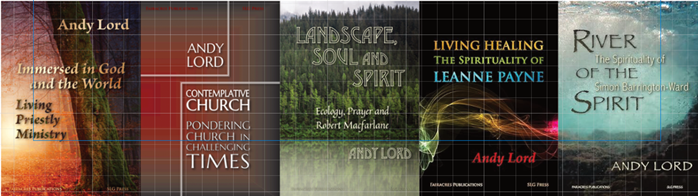
For me, reflecting on my life of faith has continued to be shaped around Jesus and the Spirit with more openness to the Father (i.e. it is Christian and hence trinitarian). Building on this, it has been shaped around the theme of priesthood, both in terms of being an ordained priest but moreso in the metaphor of being someone who relates to God and others, seeking always to draw them together. Fundamental is the knowledge and experience of the triune God who is abundantly loving and always desires to work in all creation for the better. Alongside this is the need for humble responses of those who seek to live and work with this God. My life of faith has involved seeking, seeing and experiencing the overflowing presence of God and being attentive to signs of God’s working in all people and creation. Gradually these disciplines enable a life that is lived more consciously immersed in God. More on this in Immersed in God and the World: Living Priestly Ministry.
Of course, these are very broad spiritual practices of presence and attentiveness. Probing a bit more about what it means to be attentive to the created world I have tried to integrate my theology and spirituality with my enjoyment of nature writing and particularly the work of Robert Macfarlane. Reading and re-reading his work has been part of my weekly routine, partly as something refreshingly different to church based ministry. Although he does not write from a faith perspective, I have found each of his 6 main books can be read to nurture different spiritual practices (habits). Different ways of living in this world are needed at a time of environmental crisis. These give a holistic approach to attentiveness and are suggestive of how we can integrate ecological observation and concern with faith in a God who is abundantly present. More on this in Landscape, Soul and Spirit: Ecology, Prayer and Robert Machfarlane.
From the perspective of being part of church life I wanted to explore what such a way of faith might mean for the Church of England which faces a number of deep challenges due to its failures in safeguarding, racism and in working through the conflicts on sexuality. These appear to me less as grand issues on which to take ‘a stand’ but more the personal and communal wrestling with pain and difference. Rather than solutions imposed from above I wonder what practices we can build into churches that might help us work in more positive directions given the life-giving and truth-enhancing work of God we see in Jesus? As a first step, it would seem beneficial to explore what it might mean to be a contemplative church, one in which attentiveness, reflection, questioning and praise in the Presence might shape us. Hope is found in local communities as we walk with Jesus by the Spirit. More on this in Contemplative Church: Pondering Church in Challenging Times.
Although it can be helpful to think of the divine and human sides of life as well as the churchy and the worldly parts of our lives, the reality is more more integrated. Any of our lives contain a mix of divine and human, community and world, good and bad. So it is always helpful to look more deeply at how others navigate life and faith. I have always found autobiographical books of interest and moreso the lives of particular people who have inspired me. I have written booklets on two of the many people who have shaped me over the years: Simon Barrington-Ward, who led a mission organisation and became Bishop of Coventry; and Leanne Payne, who spoke and wrote creatively on healing from a charismatic perspective. Simon helped me realise how pray can shape and sustain our work of reaching out in a hurting world and build small communities that made a difference. The movement of the Spirit and the Jesus Prayer were central to his outlook and practice. Leanne taught me that change is possible, if a life-time task, as we are open to the Spirit. We need practices that root us in God’s presence and enable us to listen to the voice of Jesus through Scripture and in all of life. Each life of faith is different and is shaped by different Christian traditions and our task is often to ask: what is God saying to me through the spiritual life of others? what might I be encouraged to adopt? More on these in River of the Spirit: The Spirituality of Simon Barrington-Ward and Living Healing: The Spirituality of Leanne Payne.
I write because I’m fascinated with life and faith but I struggle. I have hope because I do not struggle alone – the riches of God and the wisdom of others sustain and encourage me onwards. It is a form of prayer. Maybe in a small way my writings might help others glimpse ways of living in the Presence of God, attentive to the divine life at work in all places.
 Immersed
Leave a comment