Category: God

  • Thinking Prayer

    Thinking Prayer

    Most people pray – at least in desperate times! but what is prayer about? is it saying prayers in church? or having a conversation with God with whatever words come to mind? or being quiet and somehow peaceful? or crying out for help but struggling for words? Some question the usefulness of prayer when so much war and violence continues, when evil seems to triumph and when prayers are unanswered. Prayer raises questions about what sort of God we pray to: does this God need our prayers? where does Jesus fit in? what about the Spirit guiding us? If we pray then we can’t avoid thinking about prayer. Prayer and thinking go together, both centred on God.

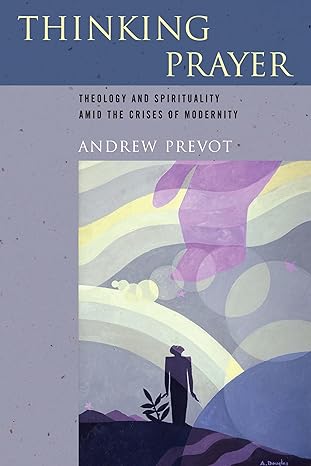
    There are many good books that teach us how to pray but fewer books exploring prayer and thought, the practice of prayer and its links to theology. If you would like a challenge then have a look at Andrew Prevot’s 2015 book Thinking Prayer. To be honest, this is quite an academic work out! It is not a book for the feint hearted or those unwilling to delve into deep philosophical questioning. This will rule most people out! Yet it is a stunning book that faces the hardest questions and seeks positive ways of approaching the task of prayer – prayer that is thinking and transformative. My aim here is to give a summary for those interested, whether or not they take the challenge to read the book for themselves.

    In short, Prevot’s argument is simple: prayer relies on God being bigger than us! God is not just another element in the universe but the creator of all who does not easily fit into our thinking or schemes. This is the source of the great hope that God can bring change into a difficult world, but challenges our tendency to fit God into our busy lives and careful plans and raises other questions. In prayer the trinitarian God is free to speak and act, as indeed are we. Prayer is the interaction of these two freedoms, even if God is greater than us and works in us. This is a free creative work of love which draws us out of ourselves into a damaged world. Prayer shapes our action and thinking and is the vital heart of Christian faith.

    Prevot identifies a number of key crises in the contemporary (modern) world: the tendency to a reduced understanding of God, a simplified god who is easy to dismiss; the construction of idealised patterns of thought that dictate how life should be; and the violence required to sustain such ideals. We struggle as we become more secular in ways that prevent outside critique; we construct competing models of the ideal life that become idols to be defended; and this turns into violence from those in power towards those to see life differently. Given such a world, the question is: how can we live allowing for critique, being less defensive and more generous towards others? The answer Prevot works towards is: we pray.

    This is a summary of his complex argument about metaphysics understood as a rational kind of rational model/science that tries to encompass all, even God. Working against this are the moves to phenomenology and the critical work of Heidegger. Prevot seeks to go beyond Heidegger via Balthasar to suggest the need for a doxological approach to prayer. This prioritises relating to God in terms of glory and the word, often expressed in praise. These are ways of prayer that allow God freedom, a freedom that by nature chooses to listen and engage with creation.

    Prevot’s argument is always careful, detailed and nuanced. Yet he wants to move us from the abstract to think about how we might pray in ways that engage a violent world. He asks: have we thought about Christian nonviolent approaches in the world? have we contemplated what prayer means in relation to the Holocaust? have we asked how for the oppressed, prayer functions to aid the political need for liberation? and what has the black tradition of the spirituals born through slavery to say to us? When prayer becomes most theoretical we are faced with the challenge to learn from those who suffer most, those who often feel our questions most personally. In a violent world there are many who live in faith and prayer and find hope despite desperate situations – might we also learn not to let despair have the last word?

    The hospitality of black spirituality, seen through the lens of James Cone, offers Prevot the hope of a way beyond violence. Prayer seeks the hospitality of God more than the victory of one over another. This reality is beyond us and hence the need for a God who is both beyond us and yet active in all things. It is a challenge to those of us who are white and/or part of the (relatively and historically) powerful in the world. Hope in a violent world might be found as we enter imaginatively into the way the excluded and oppressed see things. We are to join them in prayer for a better, more holy and just world in which the freedom of all can be respected and brought together.

    Prevot provides a manifesto for a certain way of theology, prayer and spirituality. It is an outstanding academic achievement that manages to motivate action. I continue to be inspired by its argument even as I recognise its limitations: its abstract style that seems at odds with its argument; its simplification of ‘metaphysics’ to an easy to critique definition; its limited scriptural engagement; the struggle for ‘doxology’ as praise to embrace lament and human suffering; and the lack of any personal sharing by the author in which this approach to prayer makes sense. We could do with some stories and examples!

    World news present many questions. Prayer doesn’t avoid these but is a way of entering more deeply into the problems with the God who is both above and within all. Prayer stretches our thinking to encompass new insights. Prayer challenges our love for others. Prayer is difficult, yet we can take heart that there are others on the journey. We can learn from both the struggling and the academics. It is worth persevering with both to maintain a sense of freedom and hope in a world that often wants to limit and exclude people.

    Praise God who hears the cries of all people, relates to us and acts through us for the liberation of creation.

    Bibliography: Andrew Prevot, Thinking Prayer, University of Notre Dame, 2015; See also the less philosophical but still academic work of Ashley Cocksworth, Prayer: A Guide for the Perplexed, T&T Clark, 2018.
  • Mysticism in the World

    Mysticism in the World

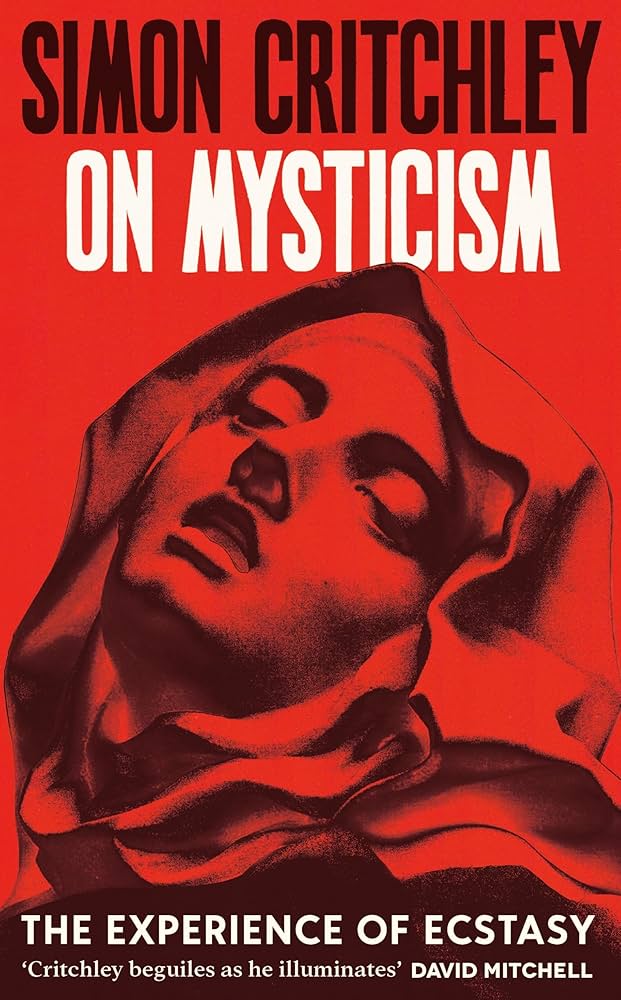
    I was browsing a second hand bookshop when I came across Simon Critchley’s “On Mysticism.” On reflection, it seemed a very good place to discover a work dedicated to exploring Christian mysticism but from a context outside of church life. Critchley is a professor of philosophy who confesses to an “intense curiosity for religion” despite agreeably spending most of his life in a secular world hostile to religion. Despite the “death of God” Critchley can’t quite escape the sense that there is “something more” than the rational – the ecstatic which is of great value.

    As we might expect of a professor, Critchley has done lots of reading! He draws much from Bernard McGinn’s rich and multi-volume survey of Western Christian mysticism, taking on board the way mysticism combines both theology and experience. At the same time he has a yearning for the classic work of William James that focuses on religious experience. These come together in Critchley’s focus on Julian of Norwich whose early intense experiences of God were followed by years of prayerful and theological reflection. Her shorter and longer Showings are creatively explored with an interest in how God is made visible through experience, how the divine is shown through the material. Critchley takes this further through engagement with Anne Carson, Annie Dillard and TS Eliot. How is it that the mystical experience of the ‘beyond’ results in the most personal of writings yet writings in which the human author seems most transparent and almost disappears? Critchley recognises that the theology of incarnation is key, drawing as it does on a belief in Jesus as fully human and fully divine. This transforms our view of matter and enables us to be immersed in the reality of the world whilst at the same time being immersed in the infinite reality of the divine.

    The impact of this on the understanding of philosophy is important for Critchley who sees philosophers as suffering “a fantasy of return to the origin,” the original texts and ideas, whereas mysticism gives us “an ongoing, transformative history of reception” (255). Philosophy often seeks a total explanation whereas mysticism is built from an abundance of fragments of experience and writings. Critchley argues that philosophers need to stop treating mysticism with distrust and distain but rather allow themselves to be challenged by its immediacy, excess and worldliness. There seems a glimpse of the current Western cultural movement towards a reappreciation of religion.

    However, for Critchley God is still dead. So what is he to do with mysticism? Translate it into forms of aesthetic experience that engage the whole of life, with something critical to communicate to the economics that dominate the world (267-285). There is a perhaps sudden shift here to the post-punk music of Julian Cope, the hearing of which have provided Critchley with mystical experience that combined with thinking brought an “idiot glee,” the “sheer mad joy at the world” that brings “releasement, detachment, enjoyment, peace, and rest” in a challenging world (285). Here is a testimony to the power and hope of mysticism. It may still find it hard to take personal steps to immersion in a known God but it helps clear the way to understanding why such steps are possible and make sense.

    Bibliography

    Simon Critchley, On Mysticism: The Experience of Ecstasy, Profile, 2024

    Rowan Williams, The Meaning of Ecstasy, New Statesman, December 2024. This is a good review of Critchley’s book that reflects more on the nature of ecstasy and ‘decreation.’

    Bernard McGinn, Foundations of Mysticism: Origins to the Fifth Century, Crossroad Publishing, 1991

    William James, Varieties of Religious Experience, 1902

  • For the good of creation

    For the good of creation

    What provides the anchor for our lives? Life comes with many ups and downs that can leave us feeling adrift. Often it is the love of others that roots and sustains us through all things. The late Queen Elizabeth II once said that her favourite Bible verses came in Paul’s letter to the Romans, where he affirms that “nothing can separate us from the love of Christ” (Rom 8:35-39). In a life of many changes and challenges the love of God that is seen in Christ provides a sure and safe anchor. This is the love that gave everything on the cross that we might know life and salvation. These are good verses to meditate on, the culmination of a chapter that starts by affirming that “there is no condemnation for those who are in Christ Jesus” (8:1).

    It was with these thoughts in mind that I bought the recent book by Tom Wright about “the heart of Romans” which looks at this whole chapter. The book itself is a bit of a mix – not quite popular (Greek is helpful!) and not quite academic (not enough Greek and references!). But what struck me in reading this book was it showed how Romans 8 is not just about God’s love for me, but about how we are created in love for the good of all creation. At a time when creation is struggling what we need are ways of life and faith that are both realistic and hopeful. This chapter starts and ends with the great hope of a divine love that will overcome all the obstacles and establish the inheritance from God of a new heavens and a new earth. But this promise is lived out in a world in which we struggle to do the good that is needed and a creation which is groaning, subject to the frustrations of not being all it was created to be 98:20,22). Given the environmental crisis this image of the world resonates with the science and feelings of the present reality.

    But what are we to do? Wright likes to challenge those who believe there is nothing we can do, saying we need to wait for a future heaven. Rather, he points to the verses that speak here of the good way of life we need to live now (8:2-13). God fills us with the Holy Spirit and leads us that we might be changed for the better. We need to listen and follow the good ways (the law of the Spirit), turning away through our lives from what harms creation. More than this, we are to lament with the pain of the world in the way shown us in the Psalms (8:22-27). There can be wordless cries of pain, frustration and loss in and through which the Spirit is interceding with us towards a better creation. Just as in creation the Spirit hovered over the darkness to bring light and life (Gen 1) so always God has been working to bring together a people of the Spirit who will bring light and life to the whole of creation. This is our vocation which is lived out in the glory of weakness, in the way of the cross, that the hope of the resurrection may become real (as in John’s Gospel). Here is a realistic yet hopeful way for the good of all.

    Wright sketches out the whole biblical narrative with many detailed references to show how God has sought to fulfil this purpose through history. The great themes of creation, fall, exodus, exile and return we see in the Old Testament are transfigured by Paul in the light of his experience of Jesus the Messiah and the Holy Spirit. The maturity of Wright’s book lies in its integration of many themes in ways that resonate and search us deeper. This is built on meticulous analysis of virtually every word of the chapter and so is not an easy read. Whilst I’m not convinced by all his arguments and it feels rather dated in its assumptions, it is a great stimulus to read the Bible afresh and integrate it better with our practice.

    Wright translates verse 28, “God works all things together for good with those who love him, who are called according to his purpose.” This may be different to other translations but there are good reasons for it. Facing the challenges of life in a time when creation is groaning, we can be assured that “God works” in ways that bring “all things together for good.” This is the God of never ending, generous love who works for the life and assurance of all. God works this out in the way of Jesus and by the Spirit with us. We are part of the way forward, a vital part of the way in which God seeks to bring the good purposes of creation into being. It is not a way that avoids pain but rather a journey with Jesus in the ways of weakness, groaning, intercession, lament and prayer… that fuels our actions with others for a better world.

    Our anchor is the love of God that we see in Christ made real by the Spirit. Yet it is not an anchor that chains us down but sets us free to keep praying and working for the good of all. May we be set free that the glory of God may be seen in and through us for the good of all creation.