Tag: jesus

  • Fascination and the Struggle to Understand and Live well

    Fascination and the Struggle to Understand and Live well

    It struck me recently that it is 30 years since I first had something I wrote published. At that time I was trying to understand how to hold together my small life with the life of the world that seemed a complex mix of deep joys and pains. It had been 10 years since my Christian faith had come alive and I had become absorbed with Jesus, the divine man who walked through the mix of life and valued each person he met. I had discovered a love and local community that had slowly begun to transform me. I had tasted the divine Spirit by which we are immersed in the fullness of God. It was all enchanting and I found I wanted to communicate this, so I wrote. Looking back, I think I needed to write both because I was fascinated but also because I struggle to remember what I’ve learnt and need to keep relearning! Moreso, I struggle to live the little wisdom that I have gained! Perhaps I write because I am fascinated with life and faith but I struggle. I pray that others may be helped through their struggles to glimpse the wonder of faith and life through my words. Good Christian writing immerses us in the presence of the God in whom we live by faith.

    The traditional resources for those struggling to understand faith are the rich writings of theology. For those like me who like to connect things together and embrace the whole of life, the traditions of systematic and mission theology particularly appeal. These opened my eyes and heart to a larger vision of God and God’s heart for all people and indeed the whole creation. I tried in three books to answer the questions: what is mission (i.e. how does God relate to the world through us?); what is the church (i.e. what sort of communities does God shape in the world and what are they for?); and how can we keep our faith alive (i.e. how can we renew our faith when it feels faint?). Hence Spirit-Shaped Mission, Network Church and Transforming Renewal which try and bring together academic and practical thought.

    Since moving to Didcot 6 years ago, I’ve found myself reflecting back both more widely and more personally. How are we to live faith today? How am I? Faith is never abstract, but embodied in people. We benefit from reflecting on the faith stories of others alongside our own. Faith is about our experience of God and not just those of others. We benefit from honest reflection on how we have related to God over the years.

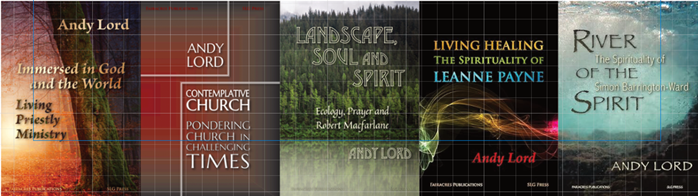
    For me, reflecting on my life of faith has continued to be shaped around Jesus and the Spirit with more openness to the Father (i.e. it is Christian and hence trinitarian). Building on this, it has been shaped around the theme of priesthood, both in terms of being an ordained priest but moreso in the metaphor of being someone who relates to God and others, seeking always to draw them together. Fundamental is the knowledge and experience of the triune God who is abundantly loving and always desires to work in all creation for the better. Alongside this is the need for humble responses of those who seek to live and work with this God. My life of faith has involved seeking, seeing and experiencing the overflowing presence of God and being attentive to signs of God’s working in all people and creation. Gradually these disciplines enable a life that is lived more consciously immersed in God. More on this in Immersed in God and the World: Living Priestly Ministry.

    Of course, these are very broad spiritual practices of presence and attentiveness. Probing a bit more about what it means to be attentive to the created world I have tried to integrate my theology and spirituality with my enjoyment of nature writing and particularly the work of Robert Macfarlane. Reading and re-reading his work has been part of my weekly routine, partly as something refreshingly different to church based ministry. Although he does not write from a faith perspective, I have found each of his 6 main books can be read to nurture different spiritual practices (habits). Different ways of living in this world are needed at a time of environmental crisis. These give a holistic approach to attentiveness and are suggestive of how we can integrate ecological observation and concern with faith in a God who is abundantly present. More on this in Landscape, Soul and Spirit: Ecology, Prayer and Robert Machfarlane.

    From the perspective of being part of church life I wanted to explore what such a way of faith might mean for the Church of England which faces a number of deep challenges due to its failures in safeguarding, racism and in working through the conflicts on sexuality. These appear to me less as grand issues on which to take ‘a stand’ but more the personal and communal wrestling with pain and difference. Rather than solutions imposed from above I wonder what practices we can build into churches that might help us work in more positive directions given the life-giving and truth-enhancing work of God we see in Jesus? As a first step, it would seem beneficial to explore what it might mean to be a contemplative church, one in which attentiveness, reflection, questioning and praise in the Presence might shape us. Hope is found in local communities as we walk with Jesus by the Spirit. More on this in Contemplative Church: Pondering Church in Challenging Times.

    Although it can be helpful to think of the divine and human sides of life as well as the churchy and the worldly parts of our lives, the reality is more more integrated. Any of our lives contain a mix of divine and human, community and world, good and bad. So it is always helpful to look more deeply at how others navigate life and faith. I have always found autobiographical books of interest and moreso the lives of particular people who have inspired me. I have written booklets on two of the many people who have shaped me over the years: Simon Barrington-Ward, who led a mission organisation and became Bishop of Coventry; and Leanne Payne, who spoke and wrote creatively on healing from a charismatic perspective. Simon helped me realise how pray can shape and sustain our work of reaching out in a hurting world and build small communities that made a difference. The movement of the Spirit and the Jesus Prayer were central to his outlook and practice. Leanne taught me that change is possible, if a life-time task, as we are open to the Spirit. We need practices that root us in God’s presence and enable us to listen to the voice of Jesus through Scripture and in all of life. Each life of faith is different and is shaped by different Christian traditions and our task is often to ask: what is God saying to me through the spiritual life of others? what might I be encouraged to adopt? More on these in River of the Spirit: The Spirituality of Simon Barrington-Ward and Living Healing: The Spirituality of Leanne Payne.

    I write because I’m fascinated with life and faith but I struggle. I have hope because I do not struggle alone – the riches of God and the wisdom of others sustain and encourage me onwards. It is a form of prayer. Maybe in a small way my writings might help others glimpse ways of living in the Presence of God, attentive to the divine life at work in all places.
  • Spirit-Led Encounter

    Spirit-Led Encounter

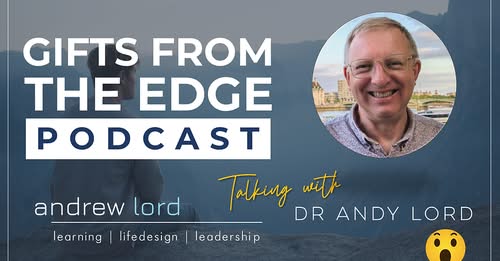
    Looking through my inbox earlier this year I noticed there was a new email which seemed to come from myself! Andrew Lord had email’d Andy Lord and it was a surprise to find that there was someone with the same name living in Australia. What is more, we shared an interest in the work of the Holy Spirit in life and ministry. Andrew had noticed my booklet Living Healing and graciously got in touch. Would I like to chat and perhaps record a podcast? Sounded interesting so we talked and it turns out that Andrew produces a regular podcast on Christian leadership and we had a number of interests in common.

    I have to admit that I do not often listen to podcasts! but with Andrew I discovered they are a good way of exploring the questions that often come up in spiritual life and ministry: What might it mean to be led by the Holy Spirit? How do we live with the awareness of Jesus with us each day? What problems have we faced and how have they shaped us? Which things are vital if we have leadership roles? Our 40 minute edited podcast enabled us to ponder such questions and help us to learn. Why not take a listen and join in our learning?

    https://www.andrewlord.com.au/post/andrew-lord-interviews-andy-lord-a-conversation-about-being-spirit-led

    We learn so much in talking with others about the questions of life and faith. We can see the church as the community of people that live the questions with each other and with God. It is a diverse and dispersed community with many perspectives. Maybe it could be seen as a mix of interacting podcasts through which we are enabled to see things differently and grow in faith. I suppose much of my writing has come out of such conversations and the questions I have been struggling to answer. We need people of different ages and cultures to shape and challenge us if we are to grow more like Jesus.

    To be led by the Spirit is to encounter fresh ideas, opportunities and people amidst the everyday. It is to be drawn into an ever expanding vision of the church as a world-wide community. It is something to pray for and gratefully accept. As John V Taylor put it, the Spirit as the Go-Between God is always connecting us to life in all its fullness and variety to the glory of God. May this podcast help us reflect together on the connections and wisdom we share together.

  • For the good of creation

    For the good of creation

    What provides the anchor for our lives? Life comes with many ups and downs that can leave us feeling adrift. Often it is the love of others that roots and sustains us through all things. The late Queen Elizabeth II once said that her favourite Bible verses came in Paul’s letter to the Romans, where he affirms that “nothing can separate us from the love of Christ” (Rom 8:35-39). In a life of many changes and challenges the love of God that is seen in Christ provides a sure and safe anchor. This is the love that gave everything on the cross that we might know life and salvation. These are good verses to meditate on, the culmination of a chapter that starts by affirming that “there is no condemnation for those who are in Christ Jesus” (8:1).

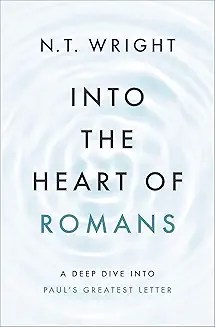
    It was with these thoughts in mind that I bought the recent book by Tom Wright about “the heart of Romans” which looks at this whole chapter. The book itself is a bit of a mix – not quite popular (Greek is helpful!) and not quite academic (not enough Greek and references!). But what struck me in reading this book was it showed how Romans 8 is not just about God’s love for me, but about how we are created in love for the good of all creation. At a time when creation is struggling what we need are ways of life and faith that are both realistic and hopeful. This chapter starts and ends with the great hope of a divine love that will overcome all the obstacles and establish the inheritance from God of a new heavens and a new earth. But this promise is lived out in a world in which we struggle to do the good that is needed and a creation which is groaning, subject to the frustrations of not being all it was created to be 98:20,22). Given the environmental crisis this image of the world resonates with the science and feelings of the present reality.

    But what are we to do? Wright likes to challenge those who believe there is nothing we can do, saying we need to wait for a future heaven. Rather, he points to the verses that speak here of the good way of life we need to live now (8:2-13). God fills us with the Holy Spirit and leads us that we might be changed for the better. We need to listen and follow the good ways (the law of the Spirit), turning away through our lives from what harms creation. More than this, we are to lament with the pain of the world in the way shown us in the Psalms (8:22-27). There can be wordless cries of pain, frustration and loss in and through which the Spirit is interceding with us towards a better creation. Just as in creation the Spirit hovered over the darkness to bring light and life (Gen 1) so always God has been working to bring together a people of the Spirit who will bring light and life to the whole of creation. This is our vocation which is lived out in the glory of weakness, in the way of the cross, that the hope of the resurrection may become real (as in John’s Gospel). Here is a realistic yet hopeful way for the good of all.

    Wright sketches out the whole biblical narrative with many detailed references to show how God has sought to fulfil this purpose through history. The great themes of creation, fall, exodus, exile and return we see in the Old Testament are transfigured by Paul in the light of his experience of Jesus the Messiah and the Holy Spirit. The maturity of Wright’s book lies in its integration of many themes in ways that resonate and search us deeper. This is built on meticulous analysis of virtually every word of the chapter and so is not an easy read. Whilst I’m not convinced by all his arguments and it feels rather dated in its assumptions, it is a great stimulus to read the Bible afresh and integrate it better with our practice.

    Wright translates verse 28, “God works all things together for good with those who love him, who are called according to his purpose.” This may be different to other translations but there are good reasons for it. Facing the challenges of life in a time when creation is groaning, we can be assured that “God works” in ways that bring “all things together for good.” This is the God of never ending, generous love who works for the life and assurance of all. God works this out in the way of Jesus and by the Spirit with us. We are part of the way forward, a vital part of the way in which God seeks to bring the good purposes of creation into being. It is not a way that avoids pain but rather a journey with Jesus in the ways of weakness, groaning, intercession, lament and prayer… that fuels our actions with others for a better world.

    Our anchor is the love of God that we see in Christ made real by the Spirit. Yet it is not an anchor that chains us down but sets us free to keep praying and working for the good of all. May we be set free that the glory of God may be seen in and through us for the good of all creation.

  • Pausing in the Ordinary

    Pausing in the Ordinary

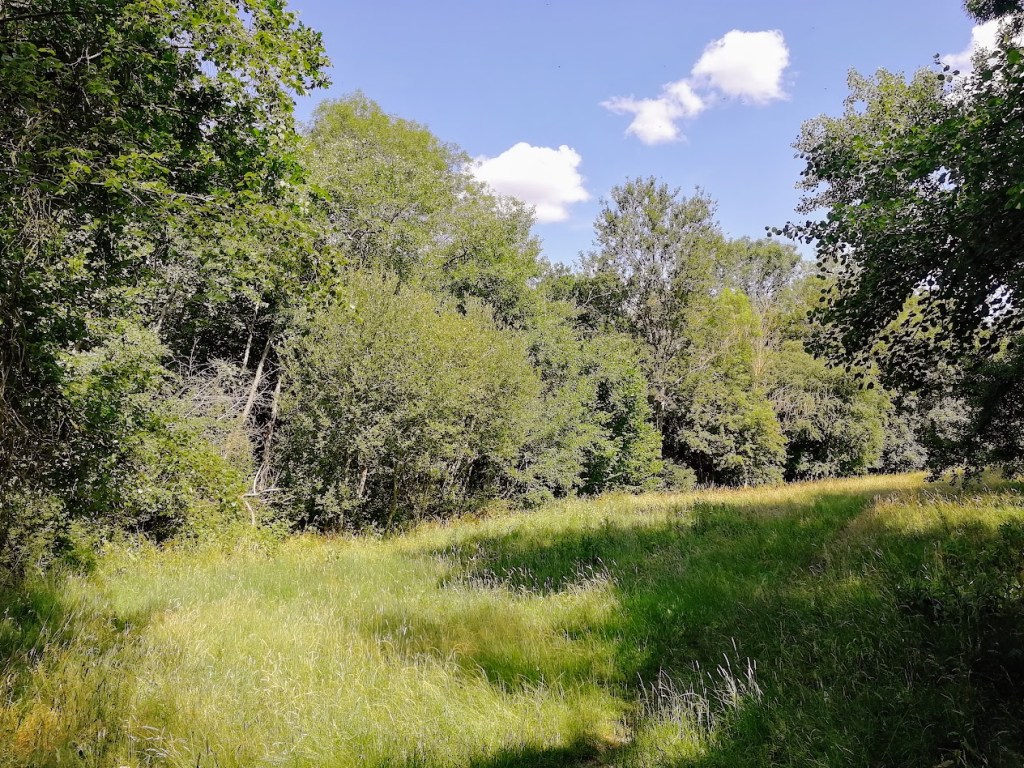
    Walking down through the woods, past the worn oaks which have seen many years pass, a narrow gap leads through to a small open glade with a seat to pause on. In spring it is the home for a rare orchid but now into summer it appears a thriving rush of greenery. It is as if every tree and bush is reaching out towards the sun, stretching to try and make use of the space. You can almost hear the lively Thames running steadily nearby. Maybe one day I will glimpse one of the local deer, but most often it is an ordinary place that most walkers travel on past.

    Each month I force time into the diary to walk to the top of Wittenham Clumps, the site of a previous Iron Age fort, then down through an open field and into the woodlands. It is local to us, but seems to span time and provide the outlook I need in order to put life into perspective. Pausing in the ordinary glade is part of my routine, having had time on the walk to shed the concerns that currently ride the surface of my mind. I need the ordinary so that I might be better grounded in life and immersed in God. I simply sit and look, noticing the life that is brought to the trees, plants and grass by the breeze, skies and earth. A steady life which proceeds whether I see it or not. Reminds me of the God who is always there, always with us, active in creative love.

    We are increasingly encouraged to take walks and notice nature as the stresses on our mental health increase. Mindfulness has become a growth industry. The irony is that it is not about growth in the usual sense but a slowing down to see what is already there. It is not another task added to life so that we might progress but the reality of life as it already is. We train our minds to slow down and notice what is around us, the life that continues, refreshes and sustains all things. It is a cultural and political challenge to the way we have done things in the modern Western era. To pause in the ordinary is no easy option nor an avoidance of social challenge.

    The Christian tradition places practices of silent awareness within an understanding of the God who is always present and active everywhere, in and through all things; the God who invites us into conversation, speaking to us; the God revealed to us in Jesus who immerses us in the Holy Spirit. In the Bible, the Spirit is often linked with life and creation. The call to be immersed (baptised) in the Spirit is therefore to become aware that the ordinary is filled with the glory of God. Often, words that draw us close to Jesus help us to see this such as use of the Jesus Prayer. The awareness of God in Christ by the Spirit may be felt or not but is real. The vital next step is that we then listen to God speaking, tentatively discerning the voice that is so close yet beyond us. This might lead to a conversation, maybe even a debate, as we are nudged and enabled to do something. To be content with awareness, separated from listening, conversing and acting can be to miss out on the practical, social and political implications of seeking to be immersed in God and the world.

    As I sit in the glade, I notice the way that the light creates patterns on the ground through the leaves and branches. Fast changing, twinkling, swaying images that have a beauty beyond capture. I can almost imagine the leaves absorbing the light and turning it into energy. Beginning to lose myself in the present my body eases and my mind finds greater peace. It takes time to hear the still silent voice inviting me to ungrasp my hands from one of the strategy papers I’m working on. I’m reminded of the words of Jesus, “Why do you worry? See how the flowers of the field grow. They do not labour or spin” (Matthew 6:28). My planning may be useful but not the solution to all the problems! I need to allow the Spirit to be at work more through the words of others; to allow people to make mistakes; to pray and trust God.

    I leave the glade a bit lighter and glimpsing better ways of acting in the church and world. Heading down towards the Thames I enjoy the simple beauty of creation, marvelling at the unchanging yet ever fresh working of God through the centuries and across this land. May I praise and listen more through each day.

    (c) 2025 Andy Lord

    Further reading: Peter Tyler, Christian Mindfulness: Theology and Practice, SCM 2018. Martin Laird, Into the Silent Land, DLT 2006. Simon Barrington-Ward, The Jesus Prayer, BRF 2007.