Tag: mindfulness

  • Spirit-Led Encounter

    Spirit-Led Encounter

    Looking through my inbox earlier this year I noticed there was a new email which seemed to come from myself! Andrew Lord had email’d Andy Lord and it was a surprise to find that there was someone with the same name living in Australia. What is more, we shared an interest in the work of the Holy Spirit in life and ministry. Andrew had noticed my booklet Living Healing and graciously got in touch. Would I like to chat and perhaps record a podcast? Sounded interesting so we talked and it turns out that Andrew produces a regular podcast on Christian leadership and we had a number of interests in common.

    I have to admit that I do not often listen to podcasts! but with Andrew I discovered they are a good way of exploring the questions that often come up in spiritual life and ministry: What might it mean to be led by the Holy Spirit? How do we live with the awareness of Jesus with us each day? What problems have we faced and how have they shaped us? Which things are vital if we have leadership roles? Our 40 minute edited podcast enabled us to ponder such questions and help us to learn. Why not take a listen and join in our learning?

    https://www.andrewlord.com.au/post/andrew-lord-interviews-andy-lord-a-conversation-about-being-spirit-led

    We learn so much in talking with others about the questions of life and faith. We can see the church as the community of people that live the questions with each other and with God. It is a diverse and dispersed community with many perspectives. Maybe it could be seen as a mix of interacting podcasts through which we are enabled to see things differently and grow in faith. I suppose much of my writing has come out of such conversations and the questions I have been struggling to answer. We need people of different ages and cultures to shape and challenge us if we are to grow more like Jesus.

    To be led by the Spirit is to encounter fresh ideas, opportunities and people amidst the everyday. It is to be drawn into an ever expanding vision of the church as a world-wide community. It is something to pray for and gratefully accept. As John V Taylor put it, the Spirit as the Go-Between God is always connecting us to life in all its fullness and variety to the glory of God. May this podcast help us reflect together on the connections and wisdom we share together.
  • Pausing in the Ordinary

    Pausing in the Ordinary

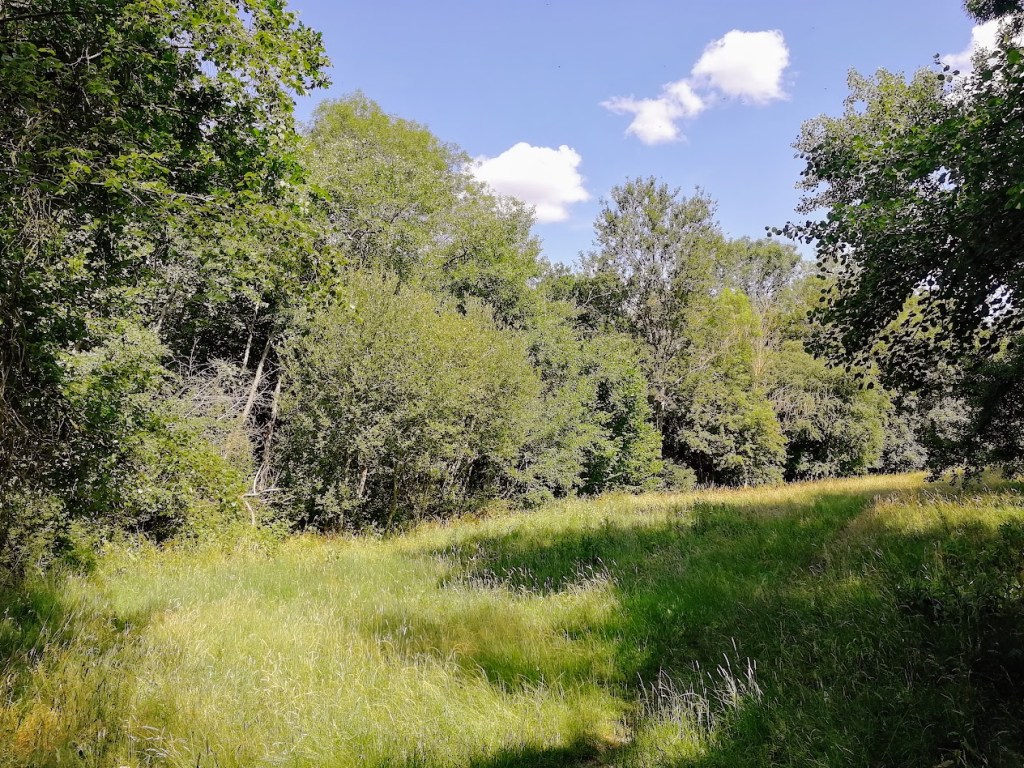
    Walking down through the woods, past the worn oaks which have seen many years pass, a narrow gap leads through to a small open glade with a seat to pause on. In spring it is the home for a rare orchid but now into summer it appears a thriving rush of greenery. It is as if every tree and bush is reaching out towards the sun, stretching to try and make use of the space. You can almost hear the lively Thames running steadily nearby. Maybe one day I will glimpse one of the local deer, but most often it is an ordinary place that most walkers travel on past.

    Each month I force time into the diary to walk to the top of Wittenham Clumps, the site of a previous Iron Age fort, then down through an open field and into the woodlands. It is local to us, but seems to span time and provide the outlook I need in order to put life into perspective. Pausing in the ordinary glade is part of my routine, having had time on the walk to shed the concerns that currently ride the surface of my mind. I need the ordinary so that I might be better grounded in life and immersed in God. I simply sit and look, noticing the life that is brought to the trees, plants and grass by the breeze, skies and earth. A steady life which proceeds whether I see it or not. Reminds me of the God who is always there, always with us, active in creative love.

    We are increasingly encouraged to take walks and notice nature as the stresses on our mental health increase. Mindfulness has become a growth industry. The irony is that it is not about growth in the usual sense but a slowing down to see what is already there. It is not another task added to life so that we might progress but the reality of life as it already is. We train our minds to slow down and notice what is around us, the life that continues, refreshes and sustains all things. It is a cultural and political challenge to the way we have done things in the modern Western era. To pause in the ordinary is no easy option nor an avoidance of social challenge.

    The Christian tradition places practices of silent awareness within an understanding of the God who is always present and active everywhere, in and through all things; the God who invites us into conversation, speaking to us; the God revealed to us in Jesus who immerses us in the Holy Spirit. In the Bible, the Spirit is often linked with life and creation. The call to be immersed (baptised) in the Spirit is therefore to become aware that the ordinary is filled with the glory of God. Often, words that draw us close to Jesus help us to see this such as use of the Jesus Prayer. The awareness of God in Christ by the Spirit may be felt or not but is real. The vital next step is that we then listen to God speaking, tentatively discerning the voice that is so close yet beyond us. This might lead to a conversation, maybe even a debate, as we are nudged and enabled to do something. To be content with awareness, separated from listening, conversing and acting can be to miss out on the practical, social and political implications of seeking to be immersed in God and the world.

    As I sit in the glade, I notice the way that the light creates patterns on the ground through the leaves and branches. Fast changing, twinkling, swaying images that have a beauty beyond capture. I can almost imagine the leaves absorbing the light and turning it into energy. Beginning to lose myself in the present my body eases and my mind finds greater peace. It takes time to hear the still silent voice inviting me to ungrasp my hands from one of the strategy papers I’m working on. I’m reminded of the words of Jesus, “Why do you worry? See how the flowers of the field grow. They do not labour or spin” (Matthew 6:28). My planning may be useful but not the solution to all the problems! I need to allow the Spirit to be at work more through the words of others; to allow people to make mistakes; to pray and trust God.

    I leave the glade a bit lighter and glimpsing better ways of acting in the church and world. Heading down towards the Thames I enjoy the simple beauty of creation, marvelling at the unchanging yet ever fresh working of God through the centuries and across this land. May I praise and listen more through each day.

    (c) 2025 Andy Lord

    Further reading: Peter Tyler, Christian Mindfulness: Theology and Practice, SCM 2018. Martin Laird, Into the Silent Land, DLT 2006. Simon Barrington-Ward, The Jesus Prayer, BRF 2007.

  • The Importance of Place

    The Importance of Place

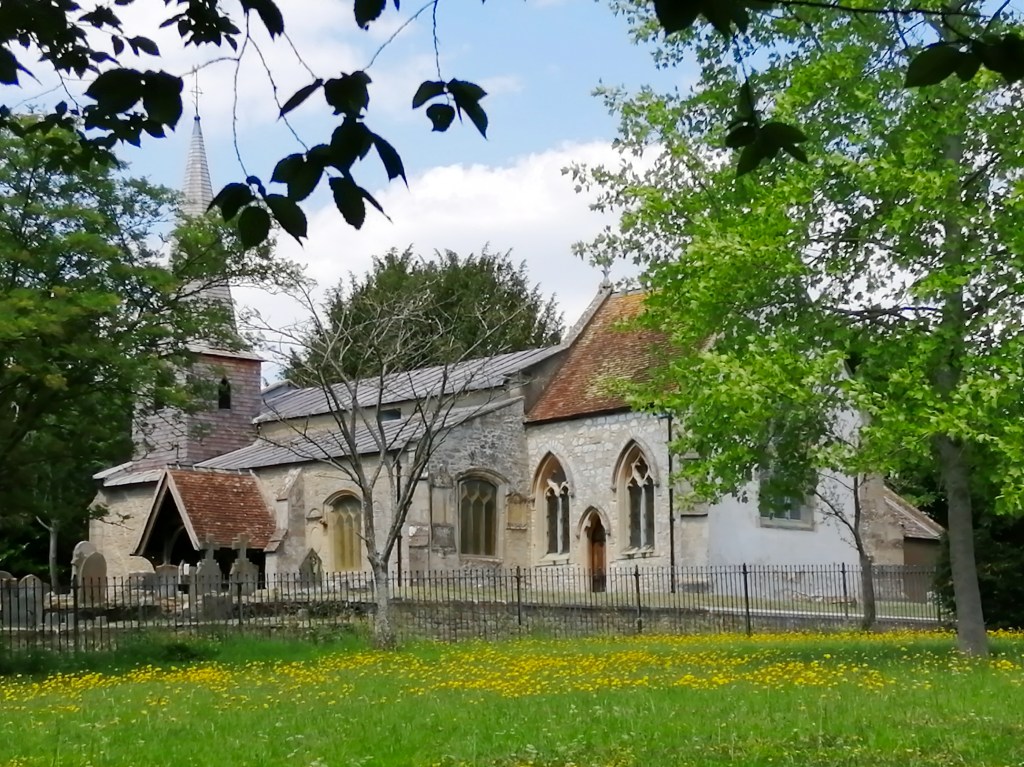
    There is great pleasure in the simple five minute walk from our house to the church hall. Past the field which, in spring, sees the central tree surrounded by a circle of yellow flowers and a border of free flowing grass. Alongside the medieval church with its memories and embodied worship; the 1,000 year old yew tree that hints at life stretching further back; and the modern churchyard with chance to meet and chat. Sounds then of children on the playground and glimpses of people focused on their walk to the railway station or army barracks. I find a gentle invitation to be immersed in what is around me rather than on what is next on the todo list.

    Walking requires good pauses and yesterday I found myself chatting with a neighbour about the many people who follow similar walks to myself, if often with dogs or families in tow. We reflected about how at a time of such difficult world news and the many mental health challenges people face, that walks that restore us have become more vital. The area surrounding the church represents the old village of Didcot, a small village of a few hundred people with its church and five surrounding farms. It has a deep time history that is often lost in its busy present reality of a town of 30,000 people. As it grows over the next 15 years to over 60,000 people the contrast between the town as a whole and particular walking spaces will get greater. Maybe around the church and old village there is an oasis of refreshing.

    Particular places to walk, ponder and chat are key to life. Life is not just a generic term but embodied in specific landscapes. We need to be immersed in the living world, not as if we can go anywhere but within the details of the places we can go. It may be our garden; for those in a local care home it is a balcony overlooking a playground; dog walkers might embrace parks and churchyards; longer distance walkers will discover river walks and trails that go back hundreds of years. To limit ourselves to a few places and routes opens up the opportunity of really seeing them, observing the detail, noticing the changing seasons. It is so expand our understanding of life but takes discipline. We have to move, to slow down and observe, to think about what we see and to allow ourselves to simply enjoy being where we are. To stop scrolling and see how much we can see around us.

    Interestingly, these disciplines are similar to those of lectio divina, the traditional form of monastic meditation. This has been focused on reading biblical and other texts – slowing down, reading and re-reading the texts, noticing what stands out, pondering the meaning and in silence simply enjoying being. This is all done within the presence of God whose love is known in joy and amidst sorrow, in words and through silence. So some speak of visio divina, seeing the divine in and through all things. This goes beyond a mindful observation of life to a hearing of God’s gentle voice that might stir our actions, and a Spirit-filled energy in which we find ourselves changing and growing. Life is not static and an immersion in oasis places through walking and pausing meditation opens us to hope for the future.

    In the Gospel of John, Jesus challenges people to see truly. Most people would say that they see the living world and notice the needs of others, but I am too often like those who kept busy and speaking in ways that cover up my blindness to what is around (John 9). It is often those who live with most struggle and limits that can teach us how to see better. So I’m trying to better notice those who can help me to discern God through the living world. I’m trying to seek out the oasis places which open my eyes and heart.

    (c) 2025 Andy Lord

    Further reading: The Franciscan tradition has much to say in how we might be immersed in creation, see the creatively wandering book of Dan Riley & Stephen Copeland’s Franciscan Lectio. A more focused approach is that of Esther de Waal, Lost in Wonder.